
Rigid gift boxes are often used for premium products because they feel strong, clean and gift-ready. But many buyers are not sure how thick the box should be.
Some products only need a standard rigid box. Some heavier products need thicker board, better structure or a stronger insert. If the box is too thin, it may feel weak or deform during shipping. If it is too thick, the cost and shipping weight may increase.
The right thickness should match the product size, product weight, box style and brand positioning. This guide explains how to choose rigid gift box thickness in a simple and practical way.
If you are planning a premium packaging project, custom rigid gift boxes can be made with different board thicknesses, wrapped papers and inserts based on your product needs.
Why Rigid Gift Box Thickness Matters
Box thickness affects more than appearance. It also affects protection, hand feel, structure and cost.
A thicker rigid box usually feels more premium and stable. It is useful for heavier products such as candle jars, perfume bottles, skincare sets and electronics. A thinner box may work well for light products such as jewelry, small cosmetics or paper gift items.
The goal is not to choose the thickest box. The goal is to choose a box that feels right, protects the product and keeps the cost reasonable.
For buyers, the most important points are simple:
Will the box hold the product safely?
Does the box feel suitable for the product price?
Will the thickness affect shipping cost?
Is the structure strong enough for transport?
When these points are clear, the thickness decision becomes easier.
What Makes Up the Thickness of a Rigid Gift Box?
A rigid gift box is usually made from greyboard or chipboard, then wrapped with printed paper, specialty paper or textured paper.
The main strength comes from the greyboard. Wrapped paper affects the final look and surface feel, but it is not the main part that carries weight.
The final box feel can be affected by:
Greyboard thickness
Wrapped paper type
Surface lamination
Box structure
Insert or inner support
Product weight
For example, a box with 2mm greyboard and good wrapped paper can already feel solid for many gift products. But for a large candle set or glass bottle set, the box may need thicker board or a stronger structure.
Common Greyboard Thickness for Rigid Gift Boxes
Different products need different board thicknesses. The table below is only a general guide. The final choice should still depend on the box size and product weight.
| Greyboard Thickness | Common Use |
|---|---|
| 1.0mm–1.2mm | Small and light products |
| 1.5mm–2.0mm | Regular rigid gift boxes |
| 2.0mm–2.5mm | Medium-heavy products |
| 2.5mm–3.0mm | Large or heavy gift boxes |
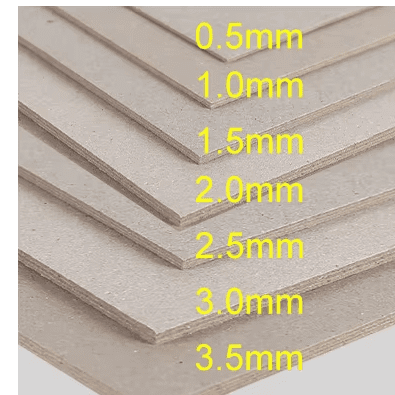
For small boxes, very thick board may look bulky. For large boxes, thin board may not be strong enough.
This is why the box size and product weight should always be checked together.
How Product Weight Affects Box Thickness
Product weight is one of the most important points when choosing rigid box thickness.
Light products, such as jewelry, small accessories or single cosmetic items, usually do not need very thick board. A clean structure and good wrapped paper may be enough.
Medium-weight products, such as perfume bottles, cream jars, skincare bottles or candle tins, usually need stronger board and a stable insert.
Heavy products, such as glass candle jars, large perfume sets, electronic accessories or tool sets, need more careful structure design. In these cases, only increasing board thickness may not be enough. The box may also need a better insert, stronger corners or a more suitable box style.
For example, custom perfume boxes often need to consider both bottle weight and glass protection. A perfume bottle may look small, but it can be heavy and fragile.
For candles, custom candle packaging boxes may need thicker board or inner support because glass jars can be heavy and easy to damage during shipping.
Wrapped Paper Also Affects the Final Look
Wrapped paper does not carry most of the product weight, but it has a big effect on the final appearance.
Common wrapped paper options include art paper, kraft paper, specialty paper, textured paper and black card paper. Different papers create different brand feelings.
Art paper is good for full-color printing. Specialty paper gives a more premium texture. Kraft paper is suitable for natural or eco-style brands. Soft-touch lamination can make the surface feel smoother and more refined.
If the product is premium, the wrapped paper should match the box thickness. A strong rigid box with poor surface paper may still look cheap. A simple structure with good paper and clean printing can look much better.
For beauty brands, a complete custom cosmetic packaging solution can help match board thickness, wrapped paper and finishing with the product positioning.
Box Structure Matters as Much as Thickness
Thickness is important, but box structure is just as important.
The same board thickness can perform differently in different box styles. A lid and base box, magnetic box, drawer box and book-style box all open and support the product in different ways.
For example, custom magnetic rigid boxes give a strong premium feeling and work well for skincare sets, perfume sets and gift products. But the magnetic flap and opening angle should be designed properly.
Custom drawer rigid boxes can create a better pull-out experience, but the sleeve and tray need the right tolerance. If the product is heavy, the drawer should not feel loose or weak.
Foldable rigid boxes can save shipping space, but they may not feel as solid as a fixed rigid box. They are better for brands that care more about storage and transport efficiency.
So when choosing thickness, do not only ask, “How thick is the board?” Also ask, “Is this structure suitable for my product?”
Inserts Help Heavy Products Stay Stable
For many rigid gift boxes, inserts are more useful than simply making the whole box thicker.
An insert keeps the product in place. It helps reduce movement during shipping and makes the inside look more organized when customers open the box.
Common insert options include EVA foam, EPE foam, paperboard inserts, molded pulp and cardboard dividers.
For glass bottles, cream jars, candles and gift sets, custom box inserts can improve both protection and presentation. The insert does not need to be complicated. It only needs to hold the product firmly and match the brand style.
If the product is heavy, the insert should be planned together with the box thickness. A strong box without a good insert may still allow the product to move inside.
How to Balance Thickness, Cost and Brand Feel
A thicker rigid gift box usually costs more. It may also increase the package weight and affect shipping cost.
That is why the thickest option is not always the best option.
For small and light products, a standard board thickness with good printing can be enough. For medium products, a stronger board and simple insert may give the best balance. For large or heavy products, thicker board and a stable structure are more important.
A smart packaging plan should balance:
Product protection
Brand feeling
Material cost
Shipping weight
Production quantity
Opening experience
If the box is for a high-value gift set, spending more on structure and surface feel makes sense. If the box is for a lower-cost promotional product, a simpler structure may be better.
Good packaging should support the product value, not create unnecessary cost.
When Should You Choose a Thicker Rigid Box?
A thicker rigid box may be a better choice when the product is heavy, fragile or positioned as premium.
It is also useful when the box size is large. Larger boxes need better support because wide panels can bend more easily.
You may need thicker board if your product includes:
Glass perfume bottles
Glass candle jars
Skincare bottles and jars
Electronics or accessories
Heavy gift sets
Multiple products in one box
Luxury retail products
However, thickness should still be checked with the box size and insert design. Sometimes a better insert or improved structure can solve the problem without making every part of the box thicker.
When Is Standard Thickness Enough?
Standard thickness is usually enough for many small or medium rigid gift boxes.
It can work well for jewelry boxes, small cosmetic boxes, light skincare sets, paper gift products, chocolate boxes and small promotional gift boxes.
If the product is not heavy and the box size is not large, using very thick board may not bring much extra value. It may only increase the cost.
For many brands, a clean design, good wrapped paper and proper insert can create a premium look without using the thickest board.
Work With a Rigid Gift Box Manufacturer
Choosing the right rigid gift box thickness is easier when the manufacturer knows your product details.
Before production, it is better to confirm the product size, product weight, box style, quantity, shipping method and whether inserts are needed. A sample is also important because it helps you check the hand feel, structure, color and opening experience before bulk production.
Yingye Packaging provides custom rigid gift boxes for cosmetics, perfume, candles, skincare, jewelry, gift sets and retail products. We support custom size, logo printing, wrapped paper options, inserts, sample support and wholesale production.
If you are not sure which thickness is right for your product, you can contact us and share your product size, weight and packaging idea. We can help suggest a suitable box structure and material option.
Conclusion
Rigid gift box thickness should match the product, not just the brand image.
Light products can use standard board thickness. Heavier products may need thicker greyboard, stronger structure or better inserts. Wrapped paper affects the look and feel, while the board and structure affect the strength.
The best choice is not always the thickest box. It is the box that protects the product, feels right in the customer’s hand and keeps the packaging cost under control.
FAQ
What thickness is commonly used for rigid gift boxes?
Many regular rigid gift boxes use around 1.5mm to 2.0mm greyboard. Smaller light boxes may use thinner board, while larger or heavier boxes may need 2.0mm to 3.0mm board.
Is thicker board always better for rigid boxes?
No. Thicker board can feel stronger, but it also increases cost and weight. The right thickness depends on the product size, product weight, box structure and shipping needs.
What thickness should I use for perfume boxes?
Perfume boxes often need a stable rigid structure and a good insert because perfume bottles are usually glass and can be heavy. The exact thickness depends on bottle size, weight and box style.
Do heavy products always need thicker rigid boxes?
Not always. Heavy products may need thicker board, but inserts and structure are also very important. A good insert can help keep the product stable and reduce damage risk.
Does wrapped paper affect rigid box strength?
Wrapped paper mainly affects the appearance and touch of the box. The main strength comes from the greyboard or chipboard inside the rigid box.