Choosing between Spot UV and foil stamping is not merely a design preference; it is a strategic decision that impacts your brand positioning, production budget, and the tactile experience of your customer. As a custom packaging manufacturer, we see many brands struggle to decide which finish will best elevate their product on a crowded retail shelf. While both techniques are designed to create contrast and draw the eye, they utilize different technologies, materials, and price structures. Understanding the technical nuances of Spot UV vs. Foil Stamping is essential for any brand manager looking to invest in high-quality custom packaging that converts.
Understanding Spot UV: The Modern Choice for Subtle Sophistication
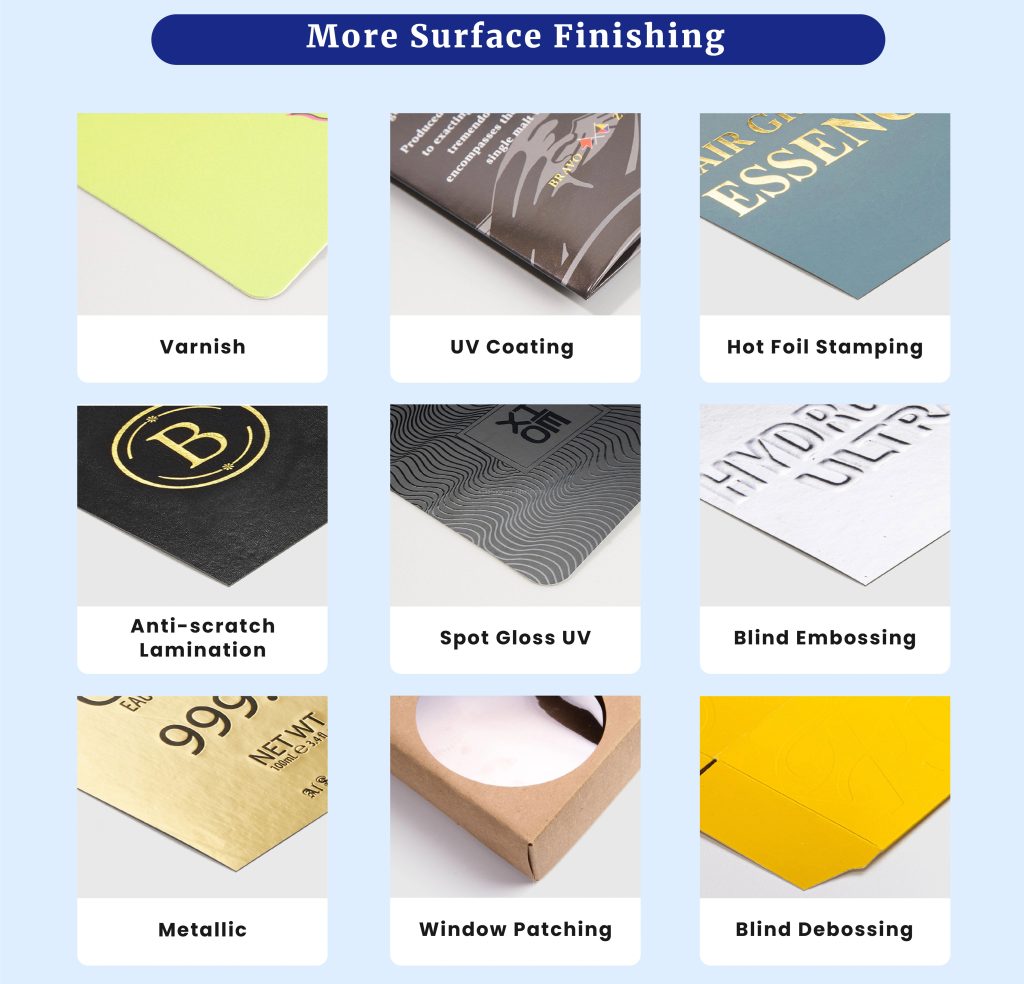
Spot UV is a liquid polymer coating that is applied to specific areas of your packaging and then instantly cured using ultraviolet light. This process creates a high-gloss, slightly raised effect that contrasts beautifully against a matte background. For most premium applications, we recommend applying Spot UV over a matte lamination on art paper or rigid board. This ensures the gloss pops with maximum clarity. In the world of rigid gift boxes, Spot UV is often used for subtle patterns, such as a repeating logo or a textured geometric design that only becomes visible when the light hits it at a certain angle.
From a manufacturing perspective, Spot UV is highly versatile. It works exceptionally well on dark colors, where the gloss creates a \”tone-on-one\” look that feels modern and minimalist. Because it is a liquid application, it can handle intricate details and fine lines better than traditional foil stamping. However, it is important to note that Spot UV requires a smooth surface. If you are using uncoated kraft paper or heavily textured corrugated boxes, the liquid will soak into the fibers, resulting in a dull, uneven finish. For these materials, a different approach is required to achieve a premium look.
The Power of Foil Stamping: Timeless Luxury and Metallic Brilliance
Foil stamping, or hot foil stamping, is the process of using heat and pressure to transfer a thin layer of metallic or pigmented foil onto the packaging material. This requires a custom metal die, often called a cliché, which is etched with your design. Foil stamping offers a level of brilliance that ink and coatings simply cannot match. Whether it is classic gold, silver, rose gold, or even holographic effects, foil provides a true metallic sheen that reflects light intensely. This makes it a favorite for custom perfume boxes and high-end cosmetics where the goal is to convey a sense of opulence and prestige.
Unlike Spot UV, foil stamping is an opaque process. This means you can apply a bright silver foil onto a deep black paperboard without any color bleed or transparency issues. It also adds a slight debossed texture to the material because of the pressure used during the stamping process. While most people associate foil with metallic finishes, it is also available in matte pigments and clear \”tint\” foils, providing a wide range of creative possibilities for your brand packaging. As a manufacturer, we advise clients that while the initial setup cost for foil is higher due to the custom die, the per-unit cost becomes very competitive at higher volumes.
Spot UV vs. Foil Stamping: A Direct Comparison
When deciding between these two finishes, you must consider three primary factors: visual impact, cost, and durability. Spot UV is generally perceived as more modern and tech-forward. It is excellent for creating depth and texture without being overly flashy. Foil stamping, on the other hand, is the gold standard for traditional luxury. It commands attention immediately and is often the first thing a consumer notices about a package.
In terms of cost, Spot UV typically has a lower setup fee because it uses a screen-printing or digital process rather than a physical metal die. This makes it a great option for brands with medium-sized production runs. Foil stamping involves the one-time cost of the die, but it offers a level of durability that is hard to beat. Foil is highly resistant to fading and can withstand the rigors of shipping better than some high-gloss coatings, which may show fingerprints or minor scuffs over time. For magnetic gift boxes intended for long-term storage or reuse, foil stamping often provides the most lasting brand impression.
Choosing the Right Finish for Your Box Structure
The structural design of your packaging also dictates which finish is most appropriate. For example, if you are designing mailer boxes made from corrugated cardboard, foil stamping can be challenging because the fluting of the cardboard can create an uneven surface for the die. In these cases, we often suggest using a litho-laminated approach where the finish is applied to a paper liner before it is glued to the corrugated board. This allows for crisp, high-quality foil or UV application even on heavy-duty shipping boxes.
For drawer boxes and sleeve boxes, Spot UV is a fantastic choice for the outer sleeve, adding a tactile element that the customer feels as they slide the box open. If you are working with eco-friendly packaging, such as uncoated kraft paper, you might find that a matte pigment foil stamping is more effective than Spot UV, as it sits on top of the fibers rather than being absorbed. Always consult with your packaging manufacturer during the structural design phase to ensure your chosen finish is compatible with your material choice and box style.
Can You Combine Both Finishes?
For brands that refuse to compromise, combining Spot UV and foil stamping can create a truly multi-dimensional unboxing experience. Imagine a rigid box with a matte black lamination, featuring a gold foil stamped logo and a clear Spot UV pattern across the rest of the lid. This combination utilizes the strengths of both techniques: the foil draws the eye to the brand name, while the Spot UV adds a layer of sophisticated texture that keeps the consumer engaged with the packaging. While this increases the number of passes through the press and adds to the lead time, the result is a piece of premium packaging that is nearly impossible to ignore.
Conclusion: Elevate Your Brand with Professional Finishing
Whether you choose the sleek, modern shimmer of Spot UV or the bold, metallic prestige of foil stamping, the goal remains the same: to create a connection with your customer before they even see the product inside. Both finishes are powerful tools in the world of custom packaging, but they require professional execution to look their best. At our facility, we specialize in high-end printing and finishing techniques that help brands stand out in a competitive market. Ready to take your packaging to the next level? Contact us today to request a custom packaging quote and let our structural designers help you choose the perfect finish for your next project.
Frequently Asked Questions
Which finish is more expensive, Spot UV or Foil Stamping?
Generally, foil stamping has a higher initial setup cost because it requires the creation of a custom metal die. However, for large production runs, the per-unit cost of foil can be similar to Spot UV. Spot UV is often more cost-effective for smaller to medium quantities where the cost of a die would be prohibitive.
Can Spot UV be applied to any type of paper?
Spot UV works best on smooth, non-porous surfaces like matte laminated art paper or silk-coated paperboard. It is not recommended for uncoated kraft paper or textured stocks, as the liquid coating will soak into the material and lose its glossy effect.
How long does it take to produce boxes with these finishes?
Adding premium finishes like Spot UV or foil stamping typically adds 3-5 business days to the standard production lead time. This allows for the creation of the dies or screens and the additional passes required through the printing press.
Is foil stamping eco-friendly?
Yes, foil-stamped packaging is generally considered recyclable. The layer of foil is so thin that it is easily separated during the de-inking and pulping process at recycling facilities. If sustainability is a primary concern, we can also discuss using eco-friendly packaging materials as the base for your foil designs.
What is the minimum order quantity (MOQ) for these finishes?
As a manufacturer, our typical MOQ for custom packaging with premium finishes like Spot UV or foil stamping starts at 500 pieces. This ensures that the setup costs are distributed across enough units to remain economical for your brand.