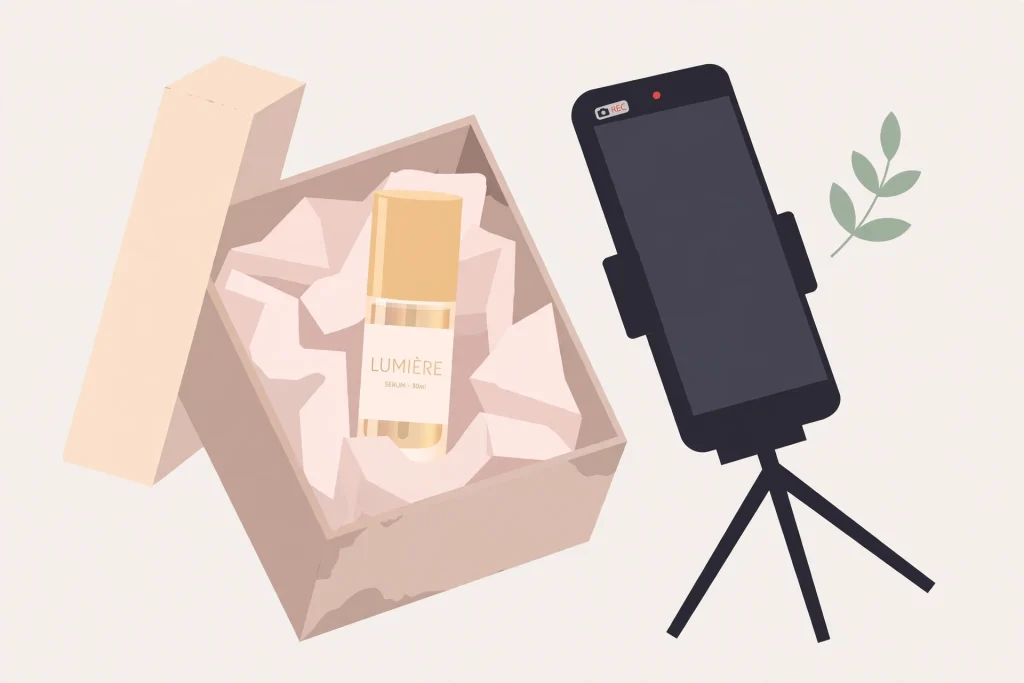
A PR box has exactly one job: make an influencer pick up their phone and start filming. Not after reading your press release — in the first thirty seconds after the lid comes off. Every structural and graphic decision in custom cosmetic packaging for a PR send-out should serve that single moment.
Brands in beauty, skincare, fragrance, and wellness now treat influencer kits as a media channel. The box is the set, the insert is the staging, and the unboxing video is the broadcast. This guide explains how experienced brands spec PR box packaging — structure, inserts, personalization, camera-ready details, cost control, and realistic timelines — from a manufacturer’s point of view.
What Counts as a PR Box or Influencer Kit
The terms get used interchangeably, but they describe slightly different sends:
- PR box: a curated package sent to press, editors, and creators, usually tied to a launch or seasonal moment. The emphasis is on presentation and brand story.
- Influencer kit / seeding kit: a package sent to creators in the hope they try the product and post about it. The emphasis is on the unboxing experience and shareability.
- Creator mailer: a lighter, often mailable version — typically a printed corrugated mailer rather than a rigid box.
What they share is intent. A PR box is not shipping packaging with a logo on it. It is a small piece of stagecraft: every layer is sequenced so the reveal feels deliberate on camera. If your “PR box” is a stock mailer with tissue paper, you have not built a PR box — you have mailed a parcel.
Why Brands Keep Spending on PR Boxes
The economics are straightforward. A single unboxing video from a mid-tier creator can generate more trusted impressions than a week of paid social, because the audience trusts the creator’s reaction more than an ad. Research on how unboxing drives brand loyalty consistently shows the same pattern: packaging that creates a moment gets remembered, photographed, and talked about.
Brands use PR kits for four recurring jobs:
- Launch amplification — seeding a new SKU to 50–200 creators in the same week so launch-day feeds fill with unboxings.
- Seasonal and gifting moments — holiday edits, Valentine’s, Mother’s Day, where the box itself carries the theme.
- Creator relationship building — a well-made kit signals that the brand takes the creator seriously, which affects whether they post.
- Retail buyer impressions — the same kit format works for buyers at Sephora, Ulta, or department stores; the “camera” is a buying meeting, but the psychology is identical.
The common thread: the recipient did not pay for the product, so the packaging carries the entire first impression. There is no purchase justification softening the judgment. The box has to earn its filming.
Choosing the Structure: Rigid Box vs Mailer
The first structural decision is whether the kit ships as a rigid box or a printed mailer — and whether it travels by courier or gets hand-delivered at an event. Get this wrong and the most beautiful design in the world arrives crushed.
| Factor | Rigid PR Box | Printed Corrugated Mailer |
|---|---|---|
| Unboxing presence on camera | High — weight, structure, and finishes read as premium | Medium — depends on print and interior design |
| Protection in transit | Excellent, especially with a fitted insert | Good, if the flute grade matches the contents |
| Typical cost per unit | Higher (materials + assembly labor) | Lower (single-piece construction) |
| Ships flat / nests | No — ships assembled, higher freight volume | Yes — flat shipping saves freight |
| Best for | Hero launches, luxury positioning, hand delivery | Seeding at scale, DTC-style sends, budget control |
| Finishing options | Foil, embossing, soft-touch, magnetic closure | Full-color print, inside printing, simple finishes |
A few practical rules from the production floor:
- If it ships by courier, design for the courier. Rigid boxes survive handling well but cost more to freight because they ship assembled. Mailers are tougher per dollar but need the right flute — E-flute for print quality on lighter kits, B-flute when the contents are heavy or the route is long.
- If it is hand-delivered (launch events, showroom appointments, buyer meetings), a rigid box with magnetic closure or a drawer structure is the standard choice. Nobody is paying freight, so spend the budget on presence.
- Hybrid approach is common: a rigid presentation box inside a plain corrugated shipper. The outer box takes the beating; the inner box delivers the moment. For high-value kits, this is the default.
- Folding cartons can work for lightweight single-product seeds, but they rarely carry a multi-item kit with the authority a PR moment needs.
Anatomy of a PR Box That Gets Filmed
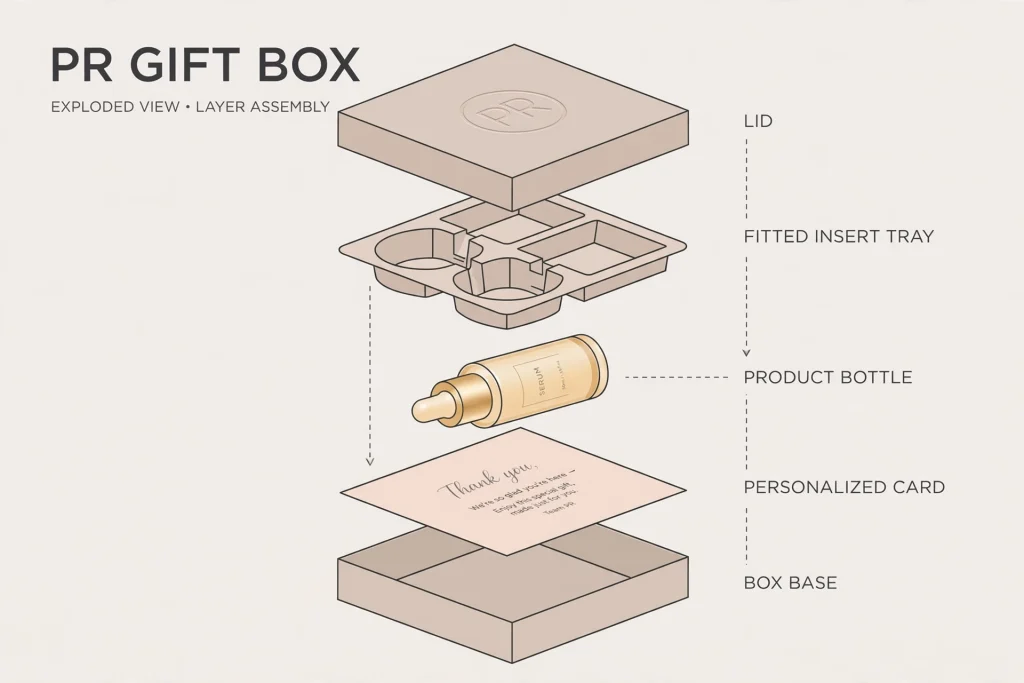
Strip a successful influencer kit down to its components and you find the same five elements, sequenced in the order the camera sees them:
1. The outer moment: lid, closure, and first reveal
The first three seconds decide whether the video continues. A lid that lifts with a soft resistance, a magnetic flap that opens with a quiet click, a drawer that slides with controlled friction — these micro-interactions read as quality before a single product is visible. Avoid fussy closures that require two hands and an instruction manual; creators film one-handed.
2. The fitted insert or tray
Nothing kills an unboxing faster than products rattling loose in shredded paper. A fitted insert — die-cut paperboard tray, molded pulp, or foam — holds every item at a precise angle, so the opened box looks composed rather than packed. This is the single highest-ROI component in a PR kit. Our inserts that hold every item in place guide covers the material options; for PR work, paperboard and molded pulp are usually the right call because they photograph as considered and stay on-brand for sustainability-minded audiences.
3. The personalized layer
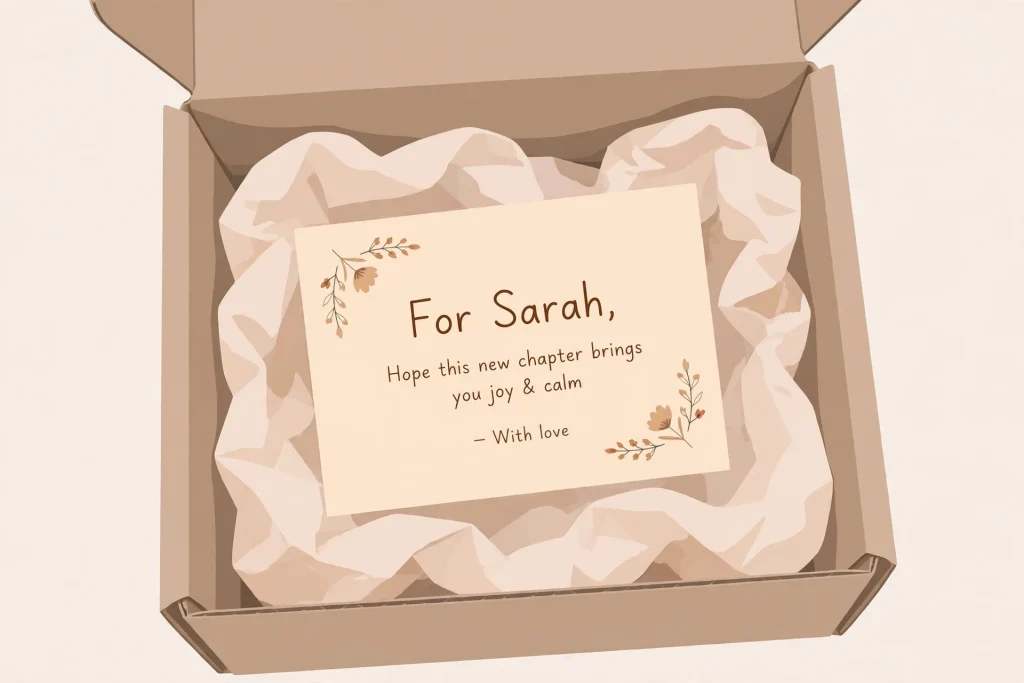
A card with the creator’s name on it — printed, not handwritten-stickered as an afterthought — changes the psychology of the whole send. It says this kit was built for one person, not mail-merged to five hundred. Personalization options that scale:
- Digitally printed name cards (economical at 100+ units)
- A short note referencing the creator’s recent content
- A QR code linking to a personalized landing page or early-access offer
4. The story card or menu
Creators cannot talk about what they do not understand. A single well-designed card — “what’s inside, why it matters, how to use it, when it launches” — gives them talking points without a press release. Keep it to one card. Nobody reads a booklet on camera.
5. The share trigger
One deliberate prompt to post: a hashtag printed inside the lid, a “film your first impression” line on the card, a small gift-with-postscript. The best share triggers feel like part of the design, not a marketing demand.
Designing for the Camera
PR packaging is one of the few packaging categories where the primary viewing environment is a phone screen, not a retail shelf. Design accordingly:
- Interior printing pays for itself. The inside of the lid is on camera longer than the outside of the box. A printed interior — brand pattern, campaign artwork, a bold color — turns the open box into a backdrop. Unprinted white interiors are a missed opportunity.
- Contrast beats subtlety on video. Soft-touch matte with a foil logo, deep color with metallic accents — finishes with tactile and visual contrast read clearly on phone cameras. Very dark boxes need good lighting to film well; very pale boxes show every scuff from shipping.
- Reveal mechanics matter more than decoration. A drawer that pulls, a lid that lifts to reveal a second layer, a ribbon pull that unveils the product — motion creates the “moment” that gets clipped and shared. Static beauty gets a photo; motion gets a video.
- Mind the top-down shot. Most unboxing videos are filmed from above. Lay the kit out, photograph it from directly overhead, and check that the composition works: products visible, branding legible, no dead space.
- Test under real conditions. Film a test unboxing with a phone in average indoor light before approving production. Studio renders lie; phone cameras do not.
For more on the social-sharing angle, see our guide to mailer boxes designed to be shared on social media.
Cost Control at Small Quantities
PR kits usually run in the low hundreds — 50 to 500 units — which is the awkward zone between prototype and production. Costs per unit run higher than bulk packaging, but there are reliable ways to keep them sane:
- Standardize the structure, customize the print. A proven rigid box structure or mailer dieline with custom artwork costs far less than a bespoke structure engineered from scratch.
- Use digital printing for short runs. Full-color digital avoids plate and setup costs that only make sense at volume. Reserve offset for runs where the unit economics work.
- Limit finishing to one or two hero treatments. One foil stamp or one soft-touch lamination delivers most of the premium signal; stacking four finishes doubles cost for marginal visual gain.
- Simplify the insert. A single die-cut paperboard tray often stages products as effectively as multi-material inserts at a fraction of the tooling cost.
- Consolidate SKUs. One kit design in one size, with product variations handled by the insert layout, beats three bespoke box sizes.
- Plan the shipper. If kits ship by courier, factor the outer shipper and its freight into the budget from day one — not as a surprise line item.
For a broader framework on managing the trade-offs, see our notes on balancing branding, unboxing and cost.
Timeline Planning for Campaign Launches
PR kits are deadline-driven — a launch date does not move because the boxes are late. Plan backwards from the in-hands date:
- Structural sampling: 3–7 days. A blank structural sample confirms the box fits, the insert holds, and the closure feels right. Never skip this on a deadline project; a fit problem discovered at 300 units is a disaster.
- Artwork and pre-production approval. Allow time for dieline-based artwork, proofs, and at least one revision round.
- Production: 15–20 days for custom boxes once artwork is approved. This is the standard window — compressing it is sometimes possible but always costs more and raises risk.
- Freight. Sea freight is economical but slow; air freight (7–10 days) is the standard contingency when a campaign date is fixed. Build the air-freight option into the plan rather than discovering it in a panic.
- Kitting and fulfillment. Assembling products into boxes, adding personalized cards, and packing shippers takes longer than brands expect — budget a full week for a few hundred kits.
A realistic end-to-end window from approved artwork to kits in hand is 5–7 weeks by sea, 4–5 weeks if air freight is on the table. Start the packaging conversation at least two months before launch.
FAQ
How many PR boxes should a brand order for a launch?
Most launch seeding programs run 50–200 kits for creators, plus a reserve for press and retail buyers. Order 10–15% over your send list — reprints of small quantities are disproportionately expensive, and a damaged-in-transit replacement sent late misses the campaign window entirely.
Rigid box or mailer for an influencer kit?
Rigid for hero launches, hand delivery, and luxury positioning; printed mailer for seeding at scale and tighter budgets. The hybrid — rigid presentation box inside a corrugated shipper — is the safest choice when kits travel by courier and the unboxing still needs to feel premium.
What is the most important component of a PR box?
The fitted insert. It controls the composition the camera sees, protects products in transit, and signals intentionality. Brands routinely overspend on exterior finishing while leaving products loose inside — invert that priority.
How do you personalize PR boxes without blowing the budget?
Digitally printed name cards and QR codes linking to personalized landing pages scale well at 100+ units. Variable-data digital printing can personalize the box itself at short runs. Avoid hand-assembly personalization unless the send list is genuinely small (under 50).
Can PR box packaging be sustainable?
Yes, with deliberate choices: FSC-certified board, paperboard inserts instead of foam, soy- or water-based inks, and right-sized boxes that avoid excess void fill. Note the trade-off honestly — magnetic closures and mixed materials complicate recycling, so keep the construction as paper-based as possible if sustainability is part of the campaign story.
Getting Your PR Kit Built
A PR box is a small production with high stakes: one structure, a few hundred units, a fixed deadline, and an audience of professional content creators judging every detail. The brands that get coverage are the ones that treat the kit as media production — scripted reveal, considered staging, and a manufacturer involved early enough to flag what will not survive a courier.
If you are planning a launch, seasonal send, or creator seeding program, contact us with your kit contents, quantities, and in-hands date. We will recommend a structure, insert approach, and timeline that fits the campaign — and provide a blank structural sample (free sample, you cover the courier) so you can feel the unboxing before you commit.